+86-18367343973

In a coastal hotel renovation, the wall cavity behind the shower had been wet for about 14 months before anyone opened it. The gypsum board crumbled at the bottom edge, dark mold ran up the wooden studs, and the entire bathroom had to be stripped to the frame. That failure did not come from a pipe leak; it came from humidity. When a room stays above 60 percent relative humidity for hours every day, porous wall materials absorb water vapor, soften, and feed mold. PVC wall panels break that chain because their closed-cell core and non-porous face do not hold moisture. But not every PVC panel performs the same in a wet room. This guide explains how to evaluate core density, surface protection, edge joints, and compliance data before you specify a product.
What Defines a High-Humidity Interior for Wall Panels?
An interior counts as high-humidity for wall cladding when relative humidity regularly exceeds 60 percent, condensation forms on walls at least once a day, and air exchange is intermittent.
Rooms that meet this definition include bathrooms, laundry rooms, indoor pool changing areas, spa treatment rooms, and commercial kitchens. In a typical shower room, steam pushes relative humidity above 90 percent for 20 to 40 minutes per use. When mechanical ventilation delivers less than 15 liters per second per square meter, moist air lingers and condenses on cooler surfaces. That daily wet-dry cycle degrades porous materials quickly.
Three signs that your project requires moisture-rated panels:
- Relative humidity above 60 percent for more than 8 hours per day
- Visible condensation on walls during or after hot-water use
- Ventilation that runs less than 30 minutes after each shower
Core definition
The humidity risk zone is the wall area from floor to 2 meters high in a room where relative humidity exceeds 60 percent at least once daily; materials in this zone must have a water absorption rate below 1 percent and a mold growth rating of 0 in accelerated testing.
Core Structure: Foam Density and Panel Thickness
Choose a PVC wall panel with a closed-cell foam core density of at least 0.55 g/cm3 for wet areas; lower-density cores absorb more water and lose screw-holding strength within the first year of exposure. Haining Yunxi New Material Technology Co., Ltd. coextrudes a rigid PVC face over a polymer foam core, and the ratio between these layers determines how the panel behaves under humidity.
Panel thickness matters just as much as density. A 6 mm panel with a thin face will bow when fixed to a substrate with uneven thermal movement. For shower-adjacent walls, an 8 mm or 10 mm panel with a face thickness of at least 2 mm provides the rigidity needed to resist warping and keep joints closed.
| Core type | Density (g/cm3) | Water absorption | Recommended use |
| Open-cell foam | 0.35-0.45 | 2.5-3.5% | Dry living areas |
| Standard foam | 0.45-0.55 | 1.0-1.5% | Bedrooms, hallways |
| High-density foam | 0.55-0.65 | 0.3-0.5% | Bathrooms, kitchens |
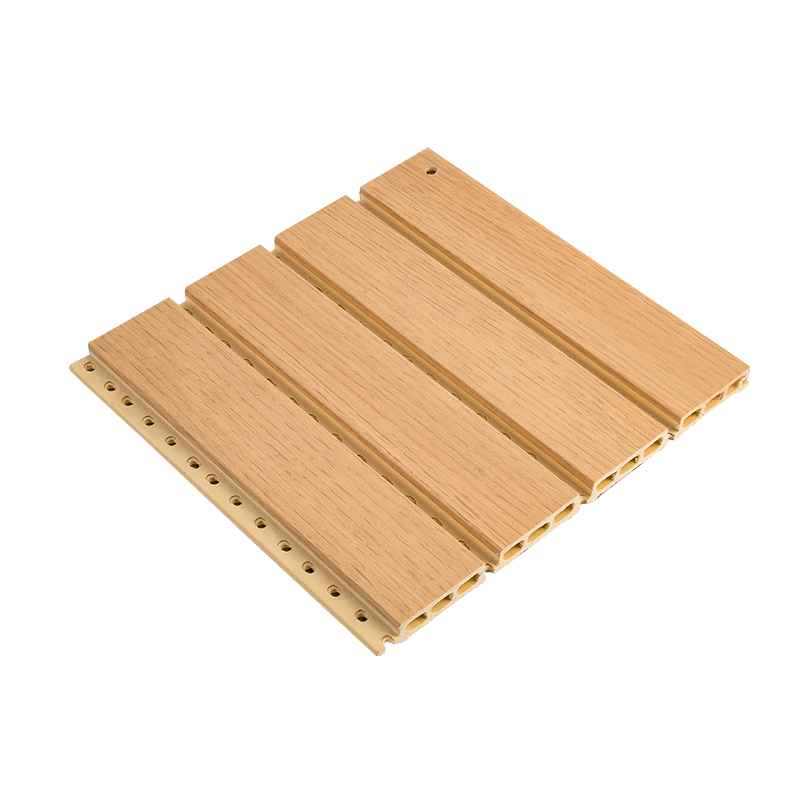
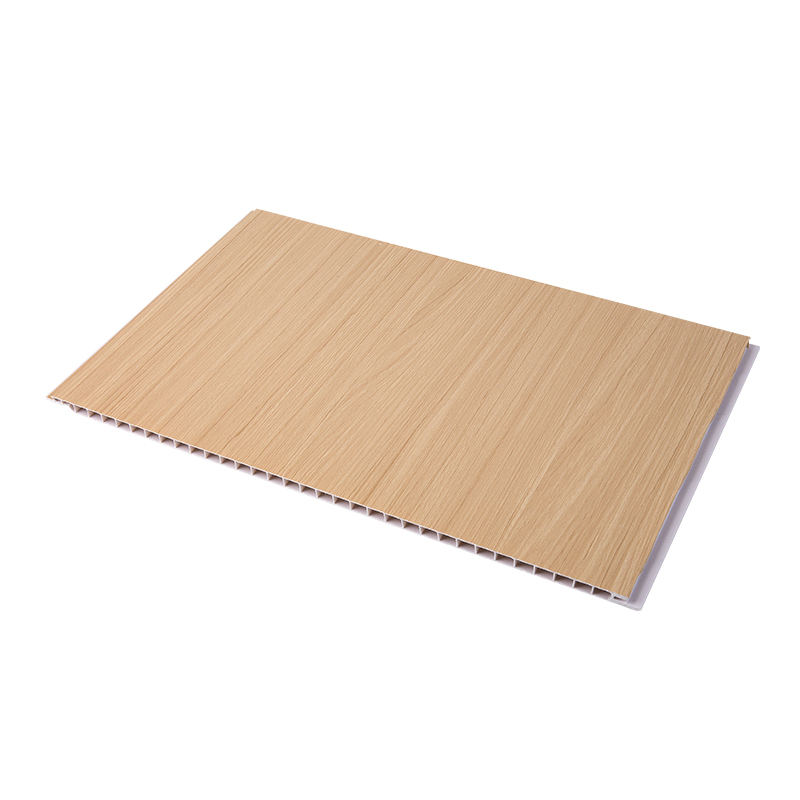 9mm Hollow Core Waterproof PVC Wall Panel with Square Hole PatternThis lightweight rigid PVC panel uses a hollow core to cut weight while maintaining impact resistance. Its low water absorption suits humid walls, and the square hole pattern enables screw fixation without pre-drilling.View Product →
Surface Finish and Edge Joints: The Second Line of Defense
The minimum surface protection for a humid interior is a 0.16 mm thick PVC film or a UV-cured acrylic topcoat; anything thinner will show water marks, scratches, and yellowing within two years. The surface layer is what contacts steam, cleaning chemicals, and physical wear, so its thickness and chemical resistance set the realistic service life of the panel.
Edge joint design determines where moisture can enter behind the panel. Interlocking tongue-and-groove edges create a continuous barrier, while butt joints with acrylic sealant depend on the sealant bead staying intact. In a room where walls move with temperature changes, a rigid sealant bead can crack in 12 to 18 months.
Before ordering, check these four details:
- Face film thickness: 0.16 mm minimum for wet areas, 0.20 mm for commercial showers
- Edge profile: interlocking or tongue-and-groove rather than flat cut
- Mounting system: aluminum profile or wet-area panel adhesive, never wooden battens
- Expansion gap: 8 mm perimeter allowance for panels above 1.2 m in width
For a step-by-step field reference, see this bathroom installation guide for waterproof PVC wall and ceiling panels, which details substrate preparation and edge sealing on wet walls.
Field note
In a hotel renovation on a coastal high-humidity zone, interlocking panels mounted on an aluminum frame stayed flat after two shower seasons. A flat-edge panel with silicone seams in the same building needed re-caulking twice and showed edge staining at the 14-month mark.
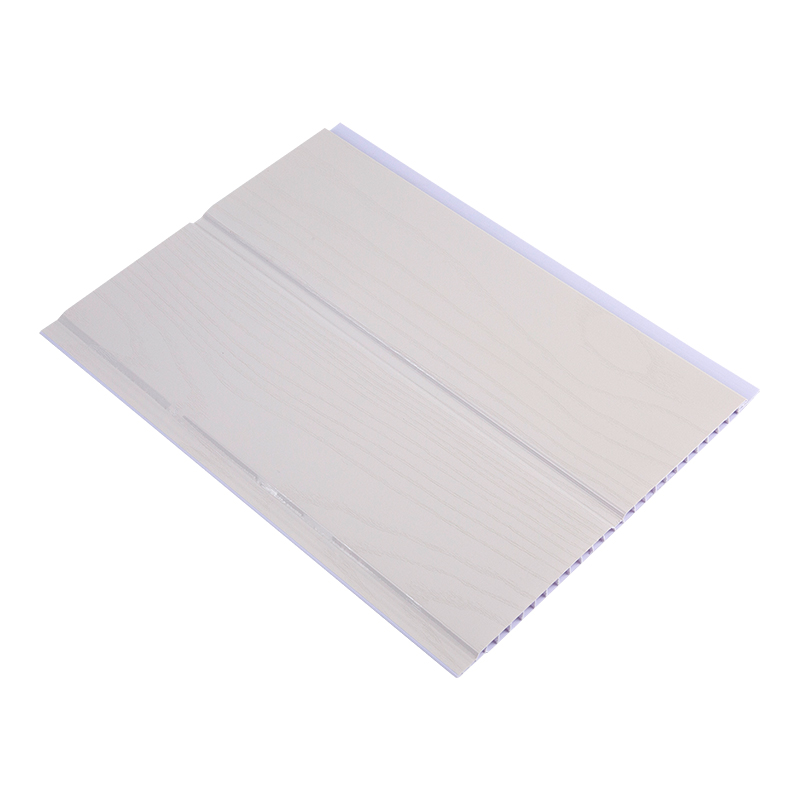 B1 Fire-Retardant Interlocking PVC Wall Cladding Sheets in Off-WhiteThis 8mm interlocking panel features a flame-suppressant formulation with a Class B1 rating and square hole fastening. Its off-white finish offers consistent light reflectance, making it a reliable choice for fire-safety-conscious wet areas.View Product →
Fire Rating, VOC Limits, and Compliance Data
Specify PVC wall panels that meet B1 fire-performance and E1 low-formaldehyde emission limits, because a closed shower room concentrates both combustion gases and off-gassed compounds. B1 means the panel is flame-retardant with slow surface spread; B2 allows limited flame spread and is acceptable only in low-occupancy storage areas.
Formaldehyde and volatile organic compound emissions matter more in hot, humid rooms because heat and moisture accelerate the release of residual monomers. A panel that tests below 0.1 mg/m3 for formaldehyde after 28 days in a climate chamber is suitable for occupied spaces such as hotel bathrooms and apartments.
Verify three documents before purchase: the B1 fire-test report, the E1 formaldehyde emission certificate, and the manufacturer's water absorption test record.
Material Comparison and Water Absorption Data
PVC wall panels outperform painted drywall and compete with ceramic tile in wet rooms when total installed cost and rework time are included. The table below summarizes the properties that matter in high-humidity environments.
| Material | Water absorption | Mold resistance | Installation time | Relative cost |
| Ceramic tile | 0.1% | Excellent | 3-5 days | High |
| Paint on drywall | 20-28% | Poor | 2-3 days | Low |
| Standard PVC panel | 0.8-1.5% | Good | 1 day | Medium |
| Waterproof PVC panel | 0.3-0.5% | Excellent | 1 day | Medium |
| WPC panel | 1.5-2.0% | Good | 1-2 days | Medium-high |
0.4% Water absorption of waterproof PVC after 24-hour immersion
1 day Installation time for a standard 6 m2 bathroom wall system
26% Water absorption of gypsum board in the same test
Water absorption comparison: PVC vs. common alternatives
Bar length reflects 24-hour immersion water absorption; lower is better.
Final Checklist Before You Buy
Use this checklist when you compare quotations from different wall panel suppliers. It covers the specifications that predict performance in a high-humidity room. Start with the full wall panel product range so you can narrow options by thickness, edge profile, and core type before requesting samples.
- Request a written core density value; reject panels below 0.55 g/cm3 for wet areas.
- Confirm the face film thickness on the order sheet, not just in the sales brochure.
- Select interlocking edge panels for walls longer than 3 meters.
- Ask for the B1 fire-test report and the E1 formaldehyde emission certificate.
- Order a 1 m2 sample and submerge a corner in water for 72 hours to check swelling.
- Measure panel width tolerance; a deviation above 0.3 mm makes tight joints difficult.
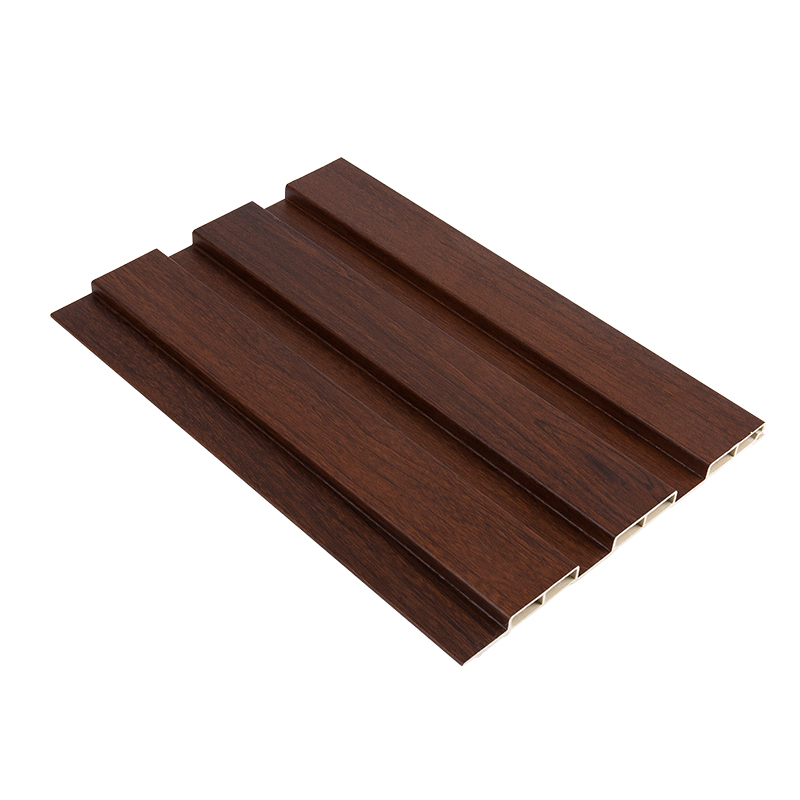
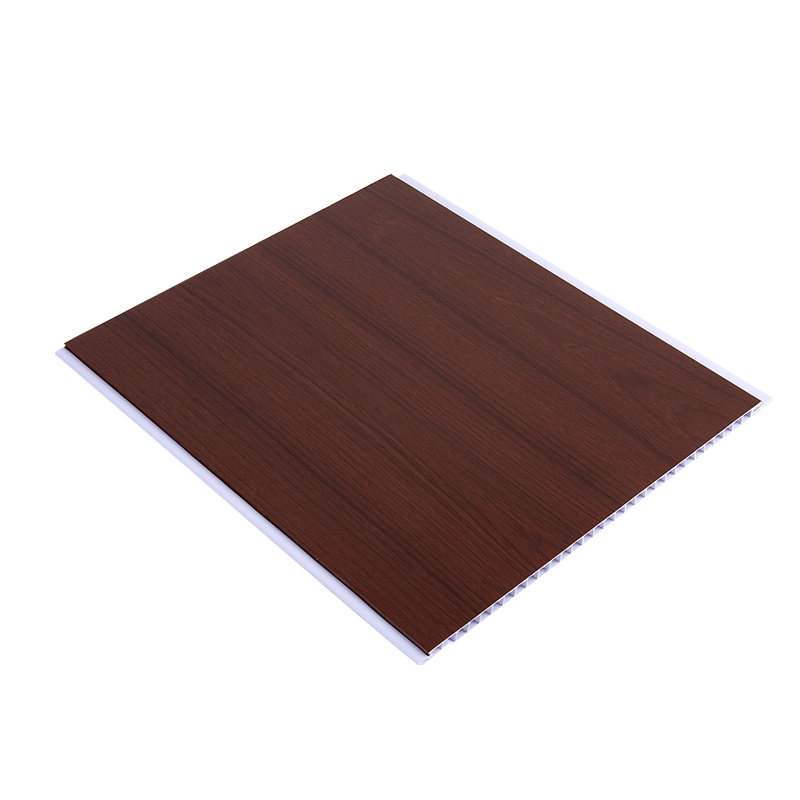 7.5mm Waterproof Dark Walnut Wood Grain PVC Wall PanelThis quick-install panel combines a non-porous PVC core with a printed walnut grain finish, absorbing under 0.1 percent water. Pre-spaced square holes speed mounting, making it suitable for bathrooms, kitchens, and other damp interiors.View Product →
Choose a panel that documents 0.3-0.5% water absorption, a B1 fire rating, E1 emission compliance, and interlocking edges; these four specifications cover most wet-room wall failures.
Frequently Asked Questions
Can PVC wall panels be installed directly over damp drywall?
No. The substrate must be dry, flat, and free of mold before PVC panels are installed. Fixing panels over damp drywall traps moisture behind the panel and creates a perfect mold substrate. Remove damaged gypsum board, treat the cavity, and install panels over a ventilated aluminum frame.
What thickness of PVC wall panel is best for a shower room?
Use 8 mm or 10 mm panels with a face thickness of at least 2 mm for shower-adjacent walls. Thicker panels resist bowing caused by temperature swings and hold the interlocking joint closed. A 6 mm panel is acceptable for a powder room with low daily moisture load.
Do PVC wall panels get mold on the surface?
A properly manufactured PVC panel with a dense, non-porous surface has a mold growth rating of 0 under accelerated tests because mold hyphae have nothing to anchor to. Mold can still grow in the gaps between panels if organic residue and soap scum are left on the surface for weeks, so periodic cleaning is required.
How do I clean PVC wall panels in a bathroom?
Wipe panels with a soft sponge and a pH-neutral cleaner diluted in warm water. Avoid abrasive pads and solvent-based sprays, which can dull the acrylic topcoat. For soap scum build-up, use a vinegar solution at 1:3 dilution and rinse thoroughly with clean water.
If a supplier cannot provide density, water absorption, fire, and emission documentation in writing, treat that as a warning sign and request another candidate.